What Is a Film Heat Seal Tester?
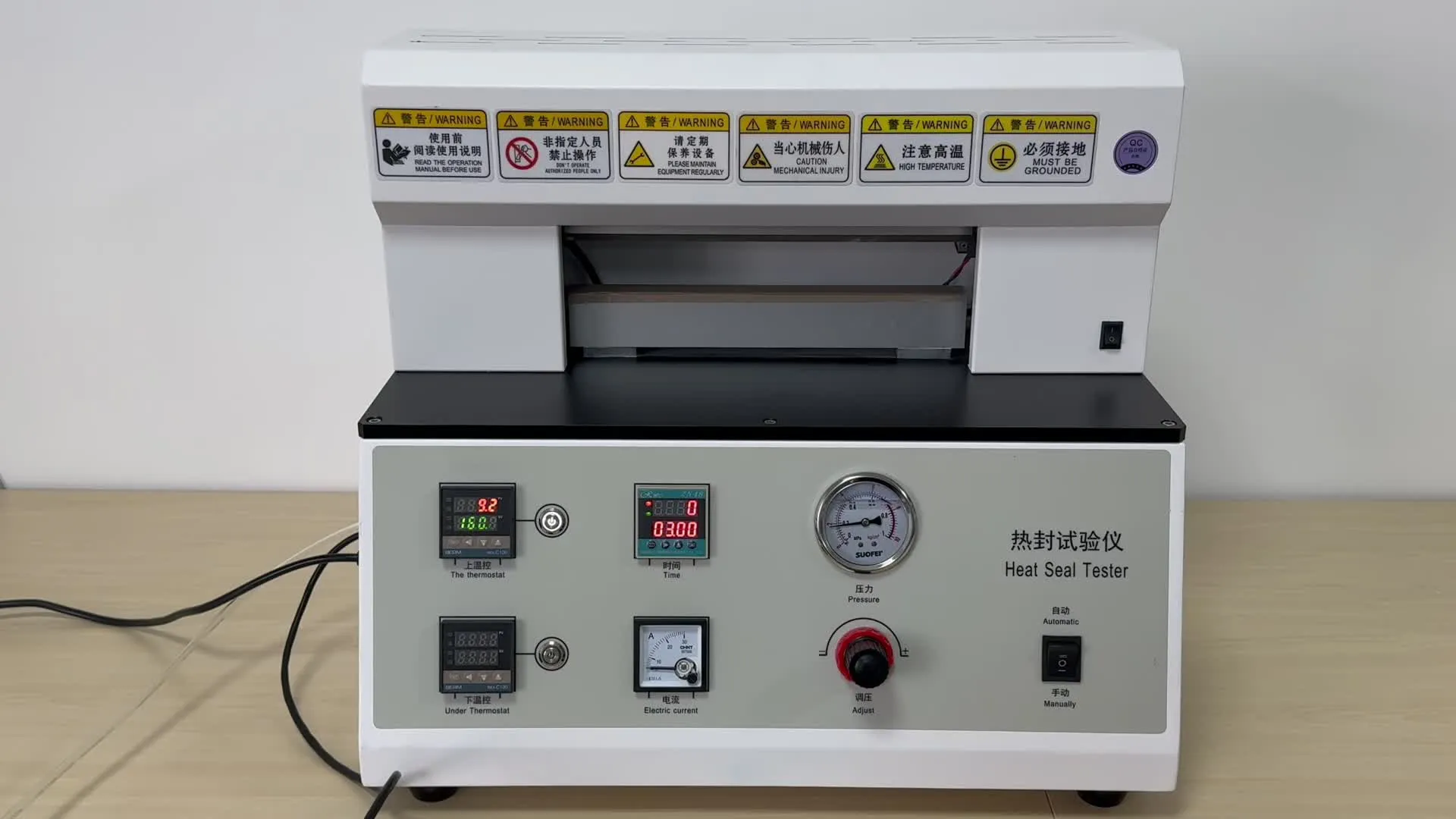
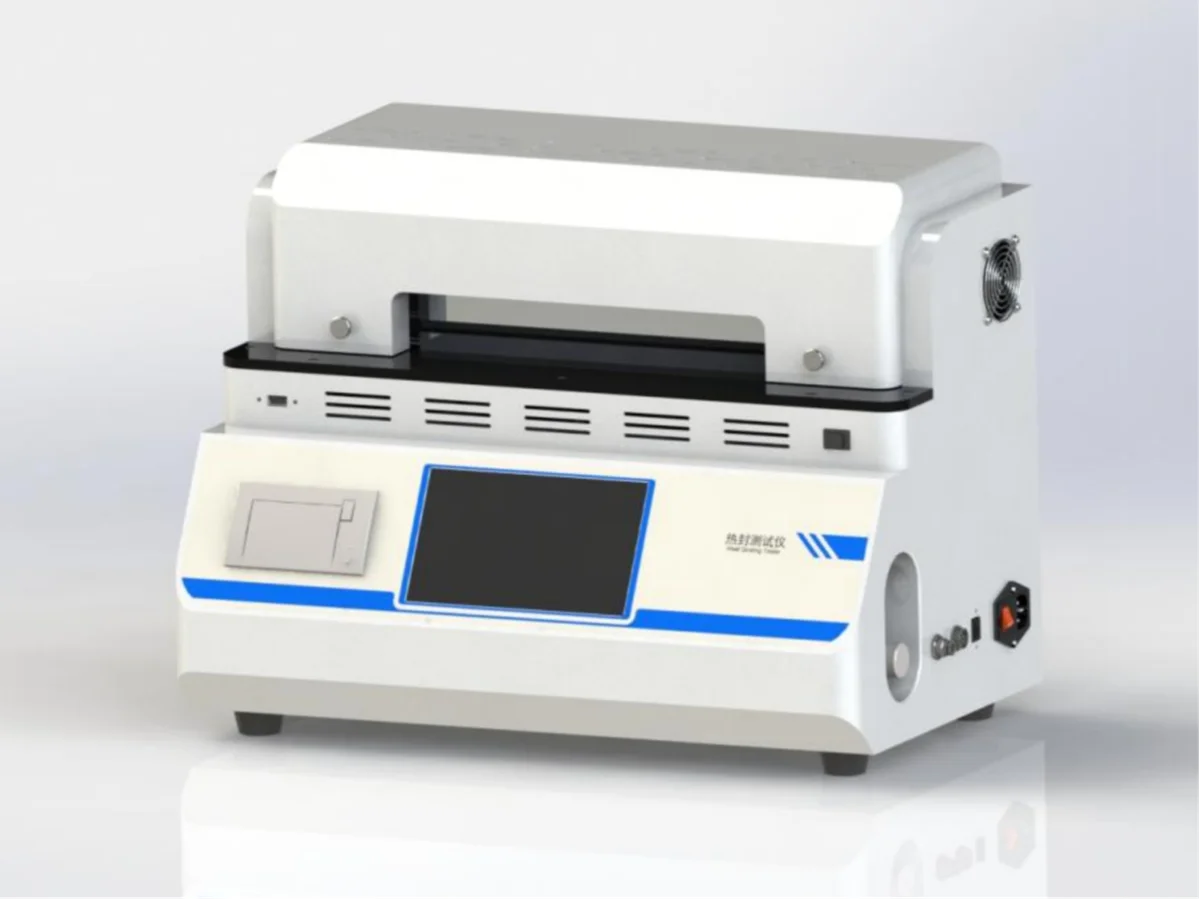
A film heat seal tester is a laboratory instrument that bonds two layers of flexible packaging film under precisely controlled temperature, pressure, and dwell time — and then measures the peel force required to separate the sealed coupon. The resulting measurement, expressed as seal strength in force per unit width (N/15mm or lb/in), provides a quantitative, reproducible assessment of heat sealability that no subjective squeeze test or visual inspection can replicate.
Unlike qualitative field checks, a properly configured film heat seal tester delivers audit-ready data traceable to published test methods. A seal strength value of 35 N/15mm means the same thing in your pilot lab as it does in a third-party contract laboratory — provided both follow the same documented procedure.
Primary users of film heat seal testers fall into three groups: R&D engineers developing new PE, PP, EVOH, or BOPP film formulations who need full seal curves before committing to production tooling; QA managers conducting systematic incoming film inspection to catch roll-to-roll variability before it reaches the packaging line; and contract laboratories issuing ASTM-compliant test reports for food, pharmaceutical, and medical device supplier qualification.
How a Film Heat Seal Tester Works
Understanding method validity begins with the instrument mechanics. A film heat seal tester consists of a heated upper jaw and a fixed lower platen, each with independent control of temperature, pressure, and dwell time. The operator places two film strips — typically 15 mm or 25 mm wide per ASTM F2029 — face-to-face with sealing surfaces in contact and machine direction noted. The jaw closes, holds for the programmed dwell time (0.1 to 5.0 s at pressures of 276 to 483 kPa, per ASTM F2029 specification), then opens. The sealed coupon is allowed to cool to ambient temperature before peel testing begins.
The 5-position gradient fixture represents the most significant productivity advance in lab heat seal methodology. Rather than a single uniform jaw temperature, a gradient bar maintains five independently controlled temperature zones along its length. A single seal run produces five specimens at five different temperatures — compressing what would otherwise require five separate runs, each preceded by a 15- to 30-minute thermal stabilization period, into a single 10-minute operation. The resulting heat seal curve plots seal strength (N/15mm) against temperature across the tested range, revealing the Seal Initiation Temperature (SIT), the plateau strength, and the upper degradation threshold where the film begins to lose integrity.
Post-seal, each coupon is cut into test strips and loaded into a peel fixture at 90° or 180° geometry. ASTM F88 governs peel speed (typically 200 to 300 mm/min) and the calculation of seal strength from the recorded force trace. For form-fill-seal (FFS) applications, hot tack testing per ASTM F1921 adds a critical dimension: peel is initiated within 50 to 150 ms of jaw opening while the seal is still warm, directly simulating the downstream tension a freshly made seal must resist on a running FFS line. A film that shows adequate cold seal strength may still fail hot tack at production-relevant speeds — a risk that standard peel testing alone cannot detect.
Why Film Manufacturers Test Heat Seal Strength
The business case for systematic seal strength testing is grounded in documented failure rates. A University of Lincoln study, cited in RDM Test Equipment's published literature, found that approximately 24% of heat seals evaluated at production facilities were already leaky or at risk of leakage — before any accelerated aging or distribution stress was applied. That failure rate represents product spoilage, recall liability, and brand damage, all preventable with a functional lab testing program.
For R&D engineers, the measurement uncertainty reduction from gradient sealing is equally compelling. Mapping a full 15-point seal curve across 80 to 200 °C for a new coextruded PE/EVOH film formulation using a single-position sealer requires re-equilibrating the jaw temperature between every run — approximately 15 to 30 minutes of stabilization per step. A complete curve takes 1.5 to 2 full working days per candidate formulation. A 5-position gradient tester collapses that same curve to three runs, approximately 3 to 4 hours. When six formulation candidates are under evaluation simultaneously, this difference — 15 days versus 3 days — determines whether a project meets its development milestone.
QA managers face a different but equally quantifiable risk. Film roll properties vary from supplier to supplier, from roll to roll within a lot, and even within a single roll — a well-established observation documented in heat seal testing literature. Accepting film shipments on supplier certificate of analysis alone, without in-house verification, means that out-of-spec sealing performance can reach the packaging line undetected.
The seal window width defines the manufacturing safety margin. Multilayer barrier films — PE/EVOH/PE composites, metallized BOPP laminates — often seal reliably only within a 10 to 15 °C band. Without a mapped curve, production temperature setpoints are chosen by experience rather than data, and any process drift pushes toward either weak seals or thermally degraded film. For peelable packaging, the tolerance is even tighter: easy-open pouches require seal strength in the 2 to 8 N/15mm range with a lot-to-lot variation of ±1 to 2 N — consistency achievable only through controlled ASTM F88 testing against a defined specification.
Contract and third-party laboratories carry an additional compliance burden. Food manufacturers, pharmaceutical packagers, and medical device companies require ASTM F2029 and ASTM F88 test documentation as part of film supplier qualification and ongoing audit evidence. Labs without in-house testing capability cannot supply this data, limiting their commercial scope.
Key Standards for Film Heat Seal Testing
Three ASTM standards govern laboratory heat seal methodology. Understanding how they interlock is essential for method validity and inter-laboratory comparability.
ASTM F2029 — "Standard Practices for Making Laboratory Heat Seals for Determination of Heat Sealability of Flexible Barrier Materials as Measured by Seal Strength" — defines the lab heat sealer setup, specimen preparation, and parameter documentation requirements. It specifies a jaw pressure range of 276 to 483 kPa (40 to 70 psi) and requires that temperature, dwell time, and pressure all be recorded for each test. F2029 does not set pass/fail criteria; it governs the procedure that produces the sealed specimens subsequently evaluated by F88.
ASTM F88 / F88M — "Standard Test Method for Seal Strength of Flexible Barrier Materials" — covers peel geometry (90° or 180°), peel rate (200 to 300 mm/min), specimen width (15 mm or 25 mm), and calculation of seal strength in N/mm or N/15mm. Results from this method appear in virtually all packaging supplier qualification documents. It is the quantitative output method that F2029 is designed to feed.
ASTM F1921 — "Standard Test Methods for Hot Seal Strength (Hot Tack) of Thermoplastic Polymers and Blends Comprising the Closure Plies of Flexible Barrier Packaging" — specifies two measurement approaches: Method A applies a constant peel force and records whether the seal holds; Method B uses rate-controlled peel and records the force trace. Peel delay of 50 to 150 ms is required to simulate FFS line conditions.
A calibration note is critical to interpreting inter-laboratory data. Seal Initiation Temperature can shift ±8 to 12 °C between instruments not calibrated to a traceable reference. ASTM F2029 compliance requires documented calibration; without it, a reported SIT value carries indeterminate measurement uncertainty and Cpk calculations derived from that data will be misleading.
KHT Instrument HS-Pro Film Heat Seal Tester
The KHT Instrument HS-Pro series was designed from the ground up to meet the procedural requirements of ASTM F2029 while eliminating the throughput bottleneck that limits productivity in single-position lab sealers. Its defining feature is the 5-position gradient jaw: five independently controlled temperature zones along a single seal bar, producing five distinct sealed specimens in a single dwell cycle. At ±0.5 °C temperature accuracy, the gradient allows researchers to map a 50 °C range of the seal curve in one run without thermal stabilization delays between steps.
| Feature | HS-Pro Specification |
|---|---|
| Temperature range | 50–250 °C |
| Temperature accuracy | ±0.5 °C |
| Dwell time range | 0.05–9.99 s |
| Seal pressure range | 100–600 kPa |
| Jaw width | 10–50 mm (interchangeable) |
| Gradient positions | Up to 5 simultaneous |
| Hot tack delay | 50–500 ms |
| Standards compliance | ASTM F2029, F88, F1921 |
| Data output | Seal curve (CSV/Excel), PDF report |
Film compatibility spans the full range of flexible packaging substrates: PE, LDPE, LLDPE, PP, BOPP, coextruded multilayer structures with EVOH barrier layers, foil laminates, and peelable heat seal coatings. Interchangeable jaw inserts accommodate 10 to 50 mm seal widths, enabling direct matching of production jaw geometry. Calibration is traceable to NIST and SI references; annual calibration service is available for laboratories requiring documented traceability for ISO 17025 accreditation or regulatory submission.
For the complete range of heat seal testing instruments and application-specific configurations, visit KHT Instrument — Heat Seal Testers.
Typical Heat Seal Test Parameters by Film Type
Engineers interpret the seal curve by identifying three characteristic zones: the initiation zone where seal strength rises steeply from zero; the plateau where strength stabilizes and the sealing window is defined; and the degradation zone where excessive temperature begins to compromise film integrity. The width of the plateau zone is the practical sealing window — the temperature band within which production setpoints can vary without producing off-spec seals.
| Film Type | SIT Range | Plateau Strength | Seal Window | Notes |
|---|---|---|---|---|
| LDPE / LLDPE | 105–125 °C | 25–50 N/15mm | 25–35 °C | Broad window; FFS standard substrate |
| BOPP (coated) | 125–145 °C | 10–25 N/15mm | 10–20 °C | Narrow; coating composition-dependent |
| PP cast (CPP) | 130–150 °C | 20–40 N/15mm | 15–25 °C | Retort and sterilization applications |
| PE/EVOH/PE | 140–165 °C | 25–55 N/15mm | 15–20 °C | Barrier multilayer; tie-layer composition critical |
| Peelable PE | 115–135 °C | 2–8 N/15mm | 10–15 °C | Easy-open specification; tight tolerance |
For FFS applications, hot tack strength of 1 to 3 N/15mm at 150 ms delay is typically required to resist downstream tension before the seal cools. ASTM F1921 testing should be conducted at conditions matching the actual production delay. Dwell time and temperature interact nonlinearly: reducing dwell from 1.0 s to 0.3 s typically requires a 10 to 15 °C compensation in jaw temperature to maintain equivalent seal strength. For production process capability, the recommended setpoint is the center of the plateau region ±5 °C, providing a Cpk of approximately 1.33 or greater — a defensible benchmark for food and pharmaceutical packaging lines.
Case Study: Accelerating New Film R&D with Gradient Sealing
A multilayer film converter in central Europe was developing a new coextruded PE/EVOH/PE structure for modified atmosphere packaging, requiring evaluation of six EVOH tie-layer formulations before pilot-scale commitment.
With a single-position heat sealer, mapping a 15-point curve across 80 to 200 °C took approximately 2.5 days per candidate — 20-minute thermal stabilization between every step. Six candidates totalled 15 working days, incompatible with the project milestone.
After installing the KHT HS-Pro 5-position gradient jaw, the same curve required three runs: approximately 4 hours per candidate. Six candidates were completed in 3 days — roughly 70% reduction in cycle time.
Full curve data revealed what single-point screening had obscured: two tie-layer variants showed nearly identical strength at the team's previous target temperature, but differed in SIT by 12 °C and produced seal windows of 18 °C versus 10 °C respectively. The wider-window formulation was selected for scale-up, providing the process capability margin needed for robust new film formulation R&D and subsequent heat seal optimization on the production line.